Zinc Alloy vs Stainless Steel: Why Your Corporate Keychain Failed After 6 Months
A materials engineer's perspective on why zinc alloy keychains corrode faster than expected, and when stainless steel isn't worth the premium.
Zinc Alloy vs Stainless Steel: Why Your Corporate Keychain Failed After 6 Months
Three months after distributing 2,000 branded keychains at your annual conference, the complaints started rolling in. Tarnished surfaces. Flaking plating. One client even sent a photo of a keychain that had turned an unsightly greenish-brown. Your supplier assured you the zinc alloy material was "premium grade" and "electroplated for durability." So what went wrong?
As a materials engineer who's spent fifteen years troubleshooting corporate gift failures, I've seen this scenario play out dozens of times. The gap between supplier promises and real-world performance often comes down to material selection decisions made without understanding the underlying metallurgy. Let's break down what actually happens when these materials meet daily use.
The Metallurgical Reality Behind Zinc Alloy
Zinc alloy—typically Zamak 3 or Zamak 5 in the corporate gift industry—offers an attractive combination of low cost and excellent castability. At roughly $2.80 per kilogram versus $8.50 for 304 stainless steel, the cost advantage seems obvious. But here's what most procurement teams don't realize: zinc alloy's corrosion resistance depends entirely on its surface treatment, not the base material itself.
!Zinc Alloy vs Stainless Steel Keychain Durability Comparison
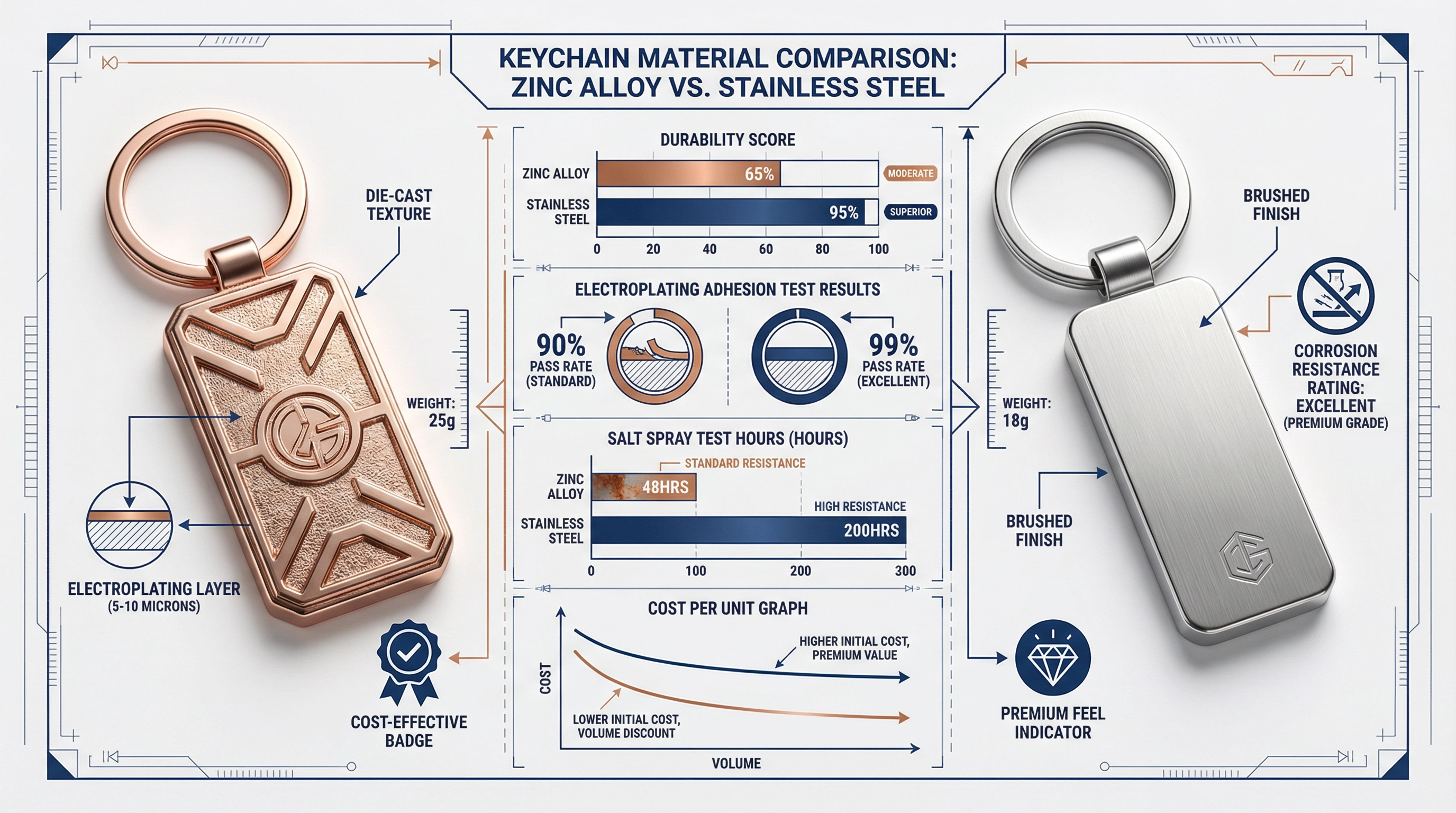
The electroplating process—usually nickel-chromium or nickel-copper-nickel layering—creates a protective barrier between the zinc substrate and the environment. When this barrier remains intact, the keychain performs well. The problem? Daily mechanical wear from keys rubbing together, exposure to hand oils (which contain chlorides and sulfates), and humidity cycling gradually compromise the plating.
In accelerated salt spray testing (ASTM B117 standard), a properly plated zinc alloy keychain should withstand 48-72 hours before showing red rust. That translates to roughly 6-9 months of normal use in temperate climates. In Singapore's tropical environment with 80-90% humidity year-round, expect that timeline to compress by 30-40%. The keychains that failed after three months? Almost certainly plated with insufficient nickel layer thickness—probably 8-10 microns instead of the recommended 15-20 microns.
When Stainless Steel Isn't the Automatic Upgrade
Your first instinct might be to switch everything to stainless steel. Not so fast. While 304-grade stainless steel (18% chromium, 8% nickel) offers superior corrosion resistance through its passive chromium oxide layer, it introduces three significant complications for corporate gifting applications.
First, the manufacturing cost differential extends beyond raw material pricing. Stainless steel's hardness (roughly 170 HB versus 95 HB for Zamak 3) requires carbide tooling and slower machining speeds. For a keychain with intricate logo details, expect machining time to increase by 60-80%. That $6 per unit price difference between zinc alloy and stainless steel? It's actually closer to $9-11 when you factor in the full production cost.
Second, stainless steel's weight becomes problematic for larger designs. A 50mm x 30mm keychain in zinc alloy weighs approximately 18 grams. The same design in stainless steel? 24 grams. That 33% weight increase might not sound significant, but when attached to a car key fob, users notice. I've seen companies receive feedback that their "premium" stainless steel keychains felt "too heavy" and were removed from key rings within weeks.
Third—and this catches many buyers off guard—not all stainless steel resists corrosion equally. The 304 grade works well in most environments, but exposure to chlorides (from sweat, seawater, or even swimming pool water) can trigger pitting corrosion. For coastal cities or tropical climates, 316 stainless steel (with 2-3% molybdenum added) provides better resistance, but now you're looking at $12-14 per kilogram material cost.
The Hidden Variable: Plating Quality Control
Here's what separates a keychain that lasts three months from one that lasts three years: plating process control. Most corporate gift suppliers outsource electroplating to specialized facilities, creating a quality control blind spot.
The critical parameters that determine plating durability:
Nickel layer thickness: Measured in microns, this should be verified with an X-ray fluorescence (XRF) gauge. Specifications typically call for 15-20 microns, but cost-cutting suppliers often deliver 8-12 microns. Each 5-micron reduction cuts corrosion resistance by approximately 40%.
Plating adhesion: Tested through a cross-hatch adhesion test (ASTM D3359), proper adhesion requires thorough surface preparation. Zinc alloy parts must be degreased, acid-etched, and rinsed before entering the plating bath. Skip or rush any step, and the plating will delaminate within months.
Post-plating passivation: A chromate conversion coating (typically trivalent chromium to meet RoHS compliance) seals the nickel-chromium surface. This step adds $0.15-0.20 per unit but extends service life by 200-300%.
When evaluating supplier quotes, ask for plating thickness specifications in writing. If they quote "standard plating" without micron measurements, that's a red flag. Request samples subjected to 72-hour salt spray testing with photographic documentation of results.
Real-World Failure Modes I've Investigated
Case 1: The Conference Giveaway Disaster
A tech company ordered 5,000 zinc alloy keychains for a Singapore conference. Within four months, 30% showed visible corrosion. Root cause analysis revealed the supplier used a single 8-micron nickel layer instead of the specified nickel-copper-nickel sandwich structure. The copper interlayer (typically 10-15 microns) provides critical corrosion protection. Skipping it saved the supplier $0.40 per unit but destroyed the client's brand reputation.
Case 2: The Stainless Steel Surprise
A luxury hotel chain upgraded to 316 stainless steel keychains, expecting zero corrosion issues. Six months later, they noticed brown staining around the logo engraving. The problem? Laser engraving had created heat-affected zones where the chromium oxide passive layer was disrupted. Without proper post-engraving passivation treatment (citric acid bath followed by air drying), these zones became corrosion initiation sites.
Case 3: The Packaging-Induced Failure
A financial services firm received complaints about tarnished keychains before distribution even began. Investigation showed the keychains were individually wrapped in PVC pouches that off-gassed plasticizers during shipping. These chemicals reacted with the nickel plating, creating a dull, discolored surface. Switching to polyethylene bags eliminated the issue.
The Cost-Performance Sweet Spot
For most corporate gifting applications in Singapore's climate, here's the material selection framework I recommend:
Short-term use (< 6 months): Zinc alloy with 12-15 micron nickel plating. Acceptable for event giveaways, promotional campaigns, or seasonal gifts. Cost: $3.50-4.50 per unit for moderate complexity designs.
Medium-term use (6-18 months): Zinc alloy with 18-20 micron nickel-copper-nickel plating plus trivalent chromium passivation. Suitable for employee recognition gifts, client appreciation items. Cost: $4.80-6.20 per unit.
Long-term use (18+ months): 304 stainless steel with brushed or bead-blasted finish (avoids plating entirely). Best for premium corporate gifts, executive items, or products representing long-term partnerships. Cost: $8.50-12.00 per unit.
Coastal/marine environments: 316 stainless steel, mandatory. The molybdenum content provides pitting resistance that 304 grade cannot match. Cost: $11.00-15.00 per unit.
What Buyers Should Verify Before Placing Orders
When reviewing supplier proposals, request these specific technical details:
- Material certification: Ask for mill certificates showing the exact alloy composition. For zinc alloy, verify it's Zamak 3 or 5, not recycled zinc with unknown impurity levels.
- Plating specification sheet: Should list each layer (copper strike, nickel, chromium) with thickness in microns and the plating bath chemistry used.
- Salt spray test results: Minimum 72 hours for zinc alloy with premium plating, 500+ hours for stainless steel. Request photos taken at 24-hour intervals.
- Surface roughness data: Measured in Ra (roughness average) microns. Smoother surfaces (Ra < 0.8 microns) hold plating better and resist corrosion longer.
- Hardness testing results: Vickers hardness (HV) should match the specified alloy. Zamak 3 typically measures 95-105 HV. Significant deviation suggests material substitution.
The Maintenance Reality Nobody Discusses
Even the best materials require appropriate care. Corporate gift recipients rarely receive usage guidelines, leading to premature failures that could have been avoided.
For zinc alloy keychains, annual cleaning with mild soap and water, followed by a light coating of clear lacquer or car wax, extends service life by 50-70%. For stainless steel, periodic cleaning with isopropyl alcohol removes chloride deposits before pitting initiates.
The challenge? Most companies don't want to include maintenance instructions with corporate gifts—it undermines the "premium" positioning. But a simple care card ("To maintain appearance, wipe with soft cloth monthly") sets realistic expectations and reduces complaint rates.
The Singapore-Specific Considerations
Singapore's combination of high humidity, salt-laden air (from the surrounding sea), and intense UV exposure creates one of the world's most corrosive environments for metal products. Materials that perform adequately in temperate climates often fail within months here.
For local distribution, I recommend adding these specifications:
- Increase nickel plating thickness by 25% over standard specifications
- Specify trivalent chromium passivation as mandatory, not optional
- Request UV-resistant clear coat for colored finishes
- Avoid zinc alloy entirely for outdoor-use items (bag tags, luggage tags)
The cost premium for Singapore-optimized specifications? Approximately 15-20% over standard pricing. But the reduction in failure rates—from 25-30% down to 3-5%—makes it worthwhile for brand protection.
Beyond the Binary Choice
The zinc alloy versus stainless steel decision isn't always binary. Some manufacturers now offer zinc alloy cores with stainless steel surface inserts for logo areas. This hybrid approach provides the cost efficiency of zinc alloy with corrosion resistance where it matters most—the visible branded surface.
Another emerging option: powder-coated zinc alloy. The polyester-epoxy coating (typically 60-80 microns thick) provides superior corrosion protection compared to electroplating, with the added benefit of unlimited color options. The trade-off? A slightly plastic-like appearance that may not suit premium positioning.
For companies prioritizing sustainability, brass (copper-zinc alloy) offers better recyclability than stainless steel and superior corrosion resistance compared to zinc alloy. The warm golden color also differentiates from the sea of silver-toned corporate keychains. Cost sits between zinc alloy and stainless steel at $5.50-7.50 per unit.
The Specification Language That Protects You
When drafting purchase orders, vague terms like "premium plating" or "corrosion-resistant finish" provide no protection when products fail. Use this specific language:
"Zinc alloy substrate shall be Zamak 3 or Zamak 5 per ASTM B86. Electroplating shall consist of: (1) alkaline copper strike 2-3 microns, (2) semi-bright nickel 10-12 microns, (3) bright nickel 5-8 microns, (4) hexavalent-free chromium 0.3-0.5 microns. Minimum salt spray resistance: 72 hours per ASTM B117 without red rust. Supplier shall provide plating thickness verification via XRF measurement for each production batch."
For stainless steel: "Material shall be 304 or 316 grade stainless steel per ASTM A240. Surface finish shall be 2B (mill finish) or No. 4 (brushed). Laser engraving, if specified, shall be followed by citric acid passivation per ASTM A967. Minimum pitting resistance: 500 hours salt spray per ASTM B117."
This level of specificity eliminates ambiguity and provides clear acceptance criteria. If a supplier balks at these requirements, they're likely cutting corners elsewhere too.
What the Next Generation of Materials Offers
Looking ahead, several material innovations may reshape corporate gift manufacturing:
PVD-coated zinc alloy: Physical vapor deposition creates a titanium nitride or zirconium nitride coating that's harder and more corrosion-resistant than electroplating. Currently 40-50% more expensive but offers 3-5x longer service life.
Duplex stainless steel: Combines austenitic and ferritic microstructures for superior strength and corrosion resistance. Overkill for most applications but relevant for marine industry corporate gifts.
Aluminum-lithium alloys: Lighter than zinc alloy, more corrosion-resistant, but requires specialized anodizing. Emerging in premium tech industry gifts.
The corporate gift industry tends to lag 5-7 years behind automotive and aerospace in adopting new materials. But as sustainability pressures increase and clients demand longer product lifecycles, expect these advanced options to become mainstream.
The zinc alloy versus stainless steel decision ultimately depends on your specific use case, budget constraints, and brand positioning. But armed with understanding of the underlying metallurgy and failure modes, you can make informed choices that balance cost with performance—and avoid those embarrassing corrosion complaints six months down the line.